Homemade Natural Sunscreen with Zinc Oxide (SPF 30–50) – Vegan & Kid-Friendly
This post contains affiliate links to the products that I use myself or can recommend. If you buy products through these links,
the price will be the same for you, and I will receive a small commission, which helps to support this blog. My affiliate policy.
Are You Concerned About the Chemicals in Conventional Sunscreen?
Do you worry about the ingredients used in most commercial sunscreens? Would you like to protect your skin from harmful UV rays without harming marine life — or your child’s delicate skin?
If so, it may be time to consider making your own natural sunscreen.
In this guide, I’ll explain the difference between chemical and mineral UV filters, how they work, and how to make your own homemade sunscreen with broad-spectrum SPF 30–50 protection.
Using simple, non-toxic ingredients like zinc oxide, shea butter and coconut oil, you can create a sunscreen that not only protects your skin from the sun, but is also kinder to the ocean and coral reefs.
And honestly? It smells absolutely beautiful too.
Sunscreen has become big business within the beauty industry — and heaven forbid anyone questions the way we’re told to protect ourselves from the sun.
Yes, sunburn is damaging. And yes, too much sun ages the skin. But conventional sunscreen may not necessarily be the healthiest solution either, especially when many formulas — even eco-certified ones — contain UV filters suspected of being endocrine disruptors.
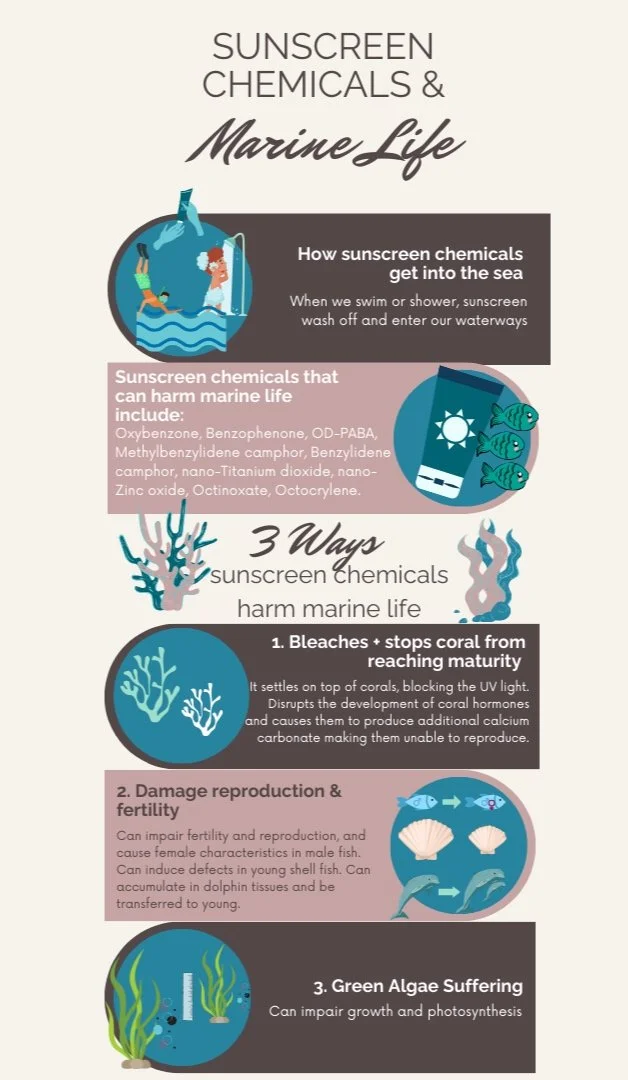
And then there’s the environmental impact on coral reefs and marine ecosystems.
Personally, if I’m spending long periods in strong sun, I prefer a combination of sensible sun exposure, protective clothing, hats, shade and natural sun protection without unnecessary synthetic ingredients.
The recipe below is quick to make and provides effective broad-spectrum protection against both UVA and UVB rays.
My views on sunscreen are admittedly unconventional. Still, I remain deeply sceptical that most conventional sunscreens actually help prevent melanoma — and I believe some may even contribute to the problem.
That’s why I’ve been making my own sunscreen for years.
It’s also worth noting that while sunscreen use has skyrocketed and we spend less time outdoors than ever before, rates of melanoma have continued to rise dramatically — even among young children.
In fact, melanoma cases have more than doubled between 2000 and 2020, and have risen sharply since the 1970s.
Whether that has anything to do with hormone-disrupting ingredients found in many conventional sunscreens — including some eco-labelled products — is still debated, but it’s certainly something I personally pay attention to.
Contents
Sunscreen, Vitamin D Deficiency & Endocrine Disruptors
Vitamin D deficiency is now considered one of the most widespread health issues globally, and it has increased alongside our reduced exposure to sunlight.
It’s estimated that around one billion people worldwide are either deficient in vitamin D or have insufficient levels.
Vitamin D3 actually functions more like a hormone in the body — a chemical messenger involved in immune function, mineral absorption, cardiovascular health and several major cancers including breast, lung and prostate cancer. (1, 2, 3).
UVB rays from midday summer sun stimulate the skin’s production of vitamin D3.
Sun-derived vitamin D influences roughly 10% of our genes, and receptors for active vitamin D are found throughout the body — from the skin and breast tissue to white blood cells.
The combination of both vitamin D deficiency and the application of hormone-disrupting sunscreens ingredients has awakened my concern.
I do not encourage anyone to avoid using sunscreen or ignore doctors' advice. I just encourage you to do your own research, look at the actual studies, and use your common sense when it comes to sun exposure and the impact it has on marine life.
What are UV Filters, and How Do They Work?
There are two different types of sun filters: Chemical sun filters and physical sun filters - also called sunscreen filters.
Physical Sunscreen Filters
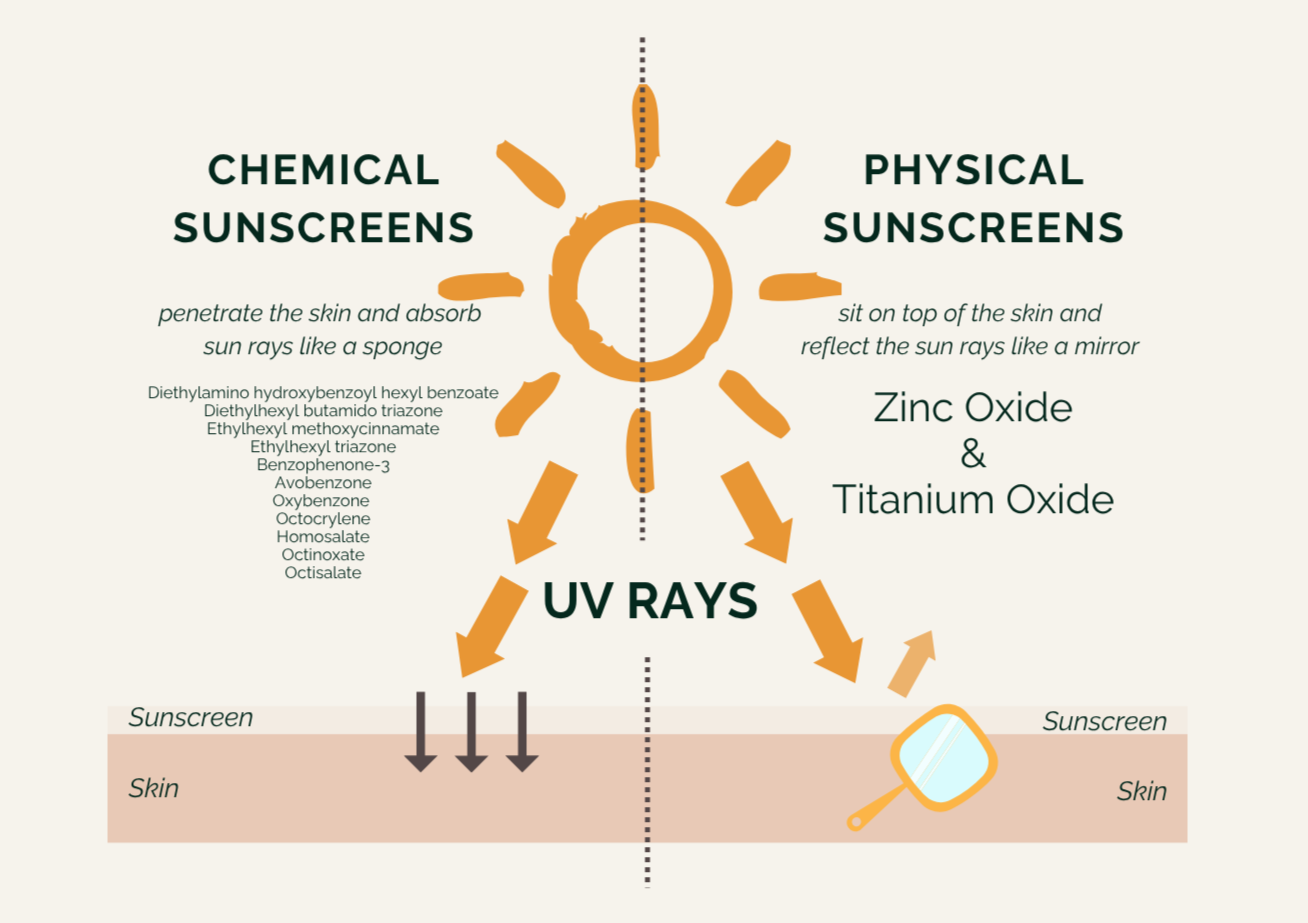
Unlike chemical filters, mineral filters sit on top of the skin rather than penetrating it.
They work by reflecting UV radiation away from the skin — almost like tiny mirrors — and offer protection against both UVA and UVB rays.
1. Zinc Oxide
Zinc oxide is a natural mineral UV filter.
When using non-nano zinc oxide, the particles are too large to penetrate the skin barrier, making it a popular choice for those wanting a more skin-friendly and ocean-friendly alternative.
8 Benefits of Zinc Oxide:
Broad-spectrum protection against both UVA and UVB rays
Provides high sun protection (roughly SPF 30–50)
Works immediately after application
A 100% natural mineral ingredient
Naturally anti-inflammatory
Naturally antibacterial
Soothes irritated or sun-exposed skin
Reef-safe and marine-friendly
2. Titanium Dioxide
The most commercially used physical sunscreen is titanium dioxide.
In 2020 EU classified titanium dioxide in its powder form as a suspected carcinogen by inhalation and unsafe in foods.
Nevertheless, The EU's Scientific Committee on Consumer Safety (SCCS) has evaluated that certain types of titanium dioxide in nano form are safe to use on the skin. Note that ingredients in nano form can unhindered pass through the skin barrier. And manufacturers that add nano titanium dioxide in products can label their products with The Nordic Swan Ecolabel (The official ecolabel of the Nordic countries).
The reason manufacturers use titanium dioxide in nano form in their products is to avoid the white film that the physical filters can give on application.
Chemical Sunscreen Filters
There are many different types of chemical sunscreens; common to them all is that they penetrate the top layer of skin.
Chemical sunscreen filters absorb the UV rays instead of your skin - like a sponge. Most chemical filters protect against UVB, and a few of them also protect against part of the UVA range.
The individual chemical filters typically have one primary area they protect and then provide small, additional protection in another area. Therefore, sunscreen products often consist of several different chemical filters and usually also a physical filter to give the desired protection.
Chemical sunscreens filters don't leave a visible white film on the skin.
The problem with chemical sunscreen filters
According to a 2012 study, benzophenone-3 was found in 96% of urine samples in the US and several UV filters in 85% of Swiss breast milk samples.
In 2020, the FDA (US Food and Drug Administration) demonstrated that six of the most popular sunscreen filters get absorbed into the bloodstream at a very high concentration, even after a single use. Some of them can stay inside our bodies for weeks. The six filters are: avobenzone, homosalate, octinoxate, octisalate, octocrylene, and oxybenzone.
Most chemical sunscreen filters are endocrine disruptors.
The endocrine-disrupting sunscreens can:
Affect sperm motility, and they are associated with impaired fetal testis development, thus reducing fertility.
Lower the release of the signal hormone LH and neurotransmitters from the hypothalamus, and it can also lower the levels of metabolic hormones in the blood.
Act as both estrogen, anti-estrogen, and anti-androgen.
Although allergenic and endocrine-disrupting ingredients are not allowed in Nordic Ecolabelled skincare, you can still find endocrine disruptors in sunscreens with that label. Including this one: diethylamino hydroxy benzoyl hexyl benzoate, also called DHHB.
The most common chemical sunscreen filters:
Diethylamino hydroxybenzoyl hexyl benzoate, DHHB (endocrine disruptor) (Nordic Ecolabelled)
Ethylhexyl triazone
isoamyl p-methoxycinnamate (endocrine disruptor)
ethylhexyl salicylate (endocrine disruptor)
homosalate (endocrine disruptor)
ethylhexyl dimethyl paba (endocrine disruptor)
butyl methoxydibenzoylmethane (endocrine disruptor)
Diethylhexyl butamido triazone (endocrine disruptor)
Ethylhexyl methoxycinnamate, also called Octinoxate (endocrine disrupting and harmful to marine life)
Benzophenone-3 (endocrine disruptor)
Enzophenone-3, also called Oxybenzone (endocrine disrupting and damaging to marine life)
Avobenzone (endocrine disruptor)
Octisalate (harmful to marine life)
Octocrylene (endocrine disruptor)
Homosalate (endocrine disruptor)
Do What Surfers, Snowboarders & Nature Lovers Do
Make your own natural sun protection — one that’s kinder to your skin, your body and the ocean.
Surfers and snowboarders often spend hours exposed to intense sun and harsh conditions, so they tend to be extremely selective about the products they use.
Many prefer mineral-based sunscreens without nano particles or chemical filters.
There are also excellent ready-made options available with brands like Amazinc!, Surf Yogis and Sol de Ibiza.

DIY Natural Sunscreen Recipe (SPF 30–50)
This natural sunscreen protects against both UVA and UVB rays using non-nano zinc oxide — without hormone-disrupting filters or unnecessary synthetic ingredients.
Why I Love This Sunscreen
Works immediately
Broad-spectrum UVA + UVB protection
Free from parabens
Free from unnecessary chemicals
Suitable for children
Suitable for all skin types
Great for sensitive skin
Helps prevent pigmentation
Can be worn under makeup
Moderately water-resistant
The 4 Things That Make All the Difference
1. Proper Dispersion – For Smooth, Even Protection
The most important step in this recipe is properly dispersing the zinc oxide.
If zinc oxide is simply stirred directly into the cream, it tends to clump — and that means uneven protection.
That’s why I first blend the zinc oxide into melted coconut oil until it forms a completely smooth paste.
This ensures the particles are evenly distributed throughout the sunscreen, resulting in more consistent SPF protection and a much silkier texture.
2. Castor Oil – For Better Water Resistance
Castor oil helps make the sunscreen more water-resistant.
It has a naturally slightly tacky texture and forms a light film on the skin, helping the zinc oxide adhere better and improving durability during heat, sweat and swimming.
Beeswax and cocoa butter also contribute to water resistance, but castor oil makes a noticeable difference.
3. Shea Butter & Cocoa Butter Crystals – How to Avoid Graininess
Like chocolate, natural butters contain fat crystals.
If shea butter and cocoa butter are overheated or cooled incorrectly, the final balm can become grainy or hard.
To keep the texture smooth and creamy:
Melt gently over low heat
Avoid overheating
Cool slowly while stirring
Only refrigerate once partially cooled
A quick blend with an immersion blender also helps create a silky texture
4. Arrowroot – For a Silky Finish & Less White Cast
Arrowroot makes a huge difference to how the sunscreen feels on the skin.
It helps absorb excess oiliness from the butters and waxes, leaving the formula feeling lighter, drier and more velvety.
At the same time, arrowroot helps distribute the zinc oxide more evenly, which can reduce the white cast often associated with mineral sunscreens.
It’s optional — but highly recommended if you prefer a softer, more elegant finish.
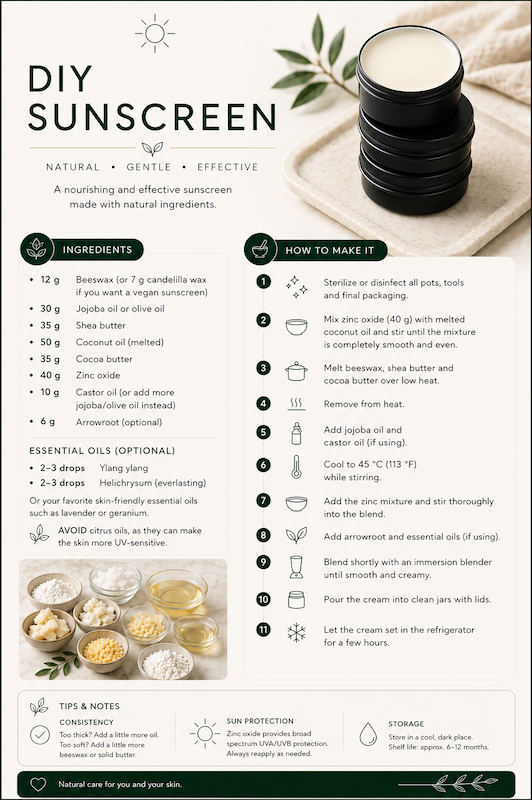
Natural Sunscreen Recipe (Approx. 200 g)
Equipment
Saucepan or double boiler
Ingredients
12 g beeswax (or 7 g candelilla wax for a vegan version)
30 g jojoba oil or olive oil
35 g shea butter
50 g melted coconut oil
35 g cocoa butter
40 g non-nano zinc oxide
10 g castor oil (optional)
6 g arrowroot powder (optional)
Optional Essential Oils
2–3 drops ylang ylang
2–3 drops helichrysum
You can also use skin-friendly essential oils such as lavender or geranium.
Avoid citrus oils, as they can make the skin more photosensitive.
Instructions
Sterilise all equipment and jars.
Mix the zinc oxide into the melted coconut oil until completely smooth.
Melt the beeswax, shea butter and cocoa butter over low heat. Don’t let the temperature exceed 75°C /167 °F !
Remove from the heat.
Stir in the jojoba oil and castor oil.
Allow the mixture to cool to around 45°C /113 °F while stirring.
Add the zinc mixture and stir thoroughly.
Add arrowroot and essential oils if using.
Blend briefly until smooth and creamy.
Pour into clean jars.
Allow to set in the fridge for a few hours.
FAQ – Homemade Natural Sunscreen
-
A little goes a long way.
Because this is a rich balm-based sunscreen, you only need a small amount.
Zinc oxide can leave a slight white cast, but when properly worked into the skin the finish becomes much more natural.
Arrowroot also helps create a softer, less greasy feel.
-
Always keep the lid tightly closed after use to prevent the balm from drying out or being exposed to moisture and bacteria.
-
When stored correctly, the sunscreen will typically last 8–12 months.
-
It’s moderately water-resistant, but should still be reapplied after swimming or excessive sweating.
-
No.
You can absolutely make a lovely sunscreen using only shea butter or only cocoa butter.
Shea butter creates a softer, creamier texture, while cocoa butter gives a firmer balm and slightly improves water resistance.
-
Arrowroot reduces greasiness and gives the sunscreen a softer, silkier skin feel.
It also helps disperse the zinc oxide more evenly, reducing the white cast.
-
Helichrysum — also known as everlasting flower — is a luxurious essential oil beloved in natural skincare.
It has soothing and cooling properties and is often used for sun-exposed or irritated skin.
The name comes from Greek:
Heli = sun
Chrysos = gold
The beautiful golden flower loves the sun itself.
Because it takes enormous amounts of flowers to produce even a tiny quantity of oil, true helichrysum is extremely expensive.
If you find a suspiciously cheap version, it’s often diluted or inauthentic.
-
Yes.
Zinc oxide is a well-documented mineral UV filter that offers broad-spectrum protection against both UVA and UVB rays.
The key is applying enough product and reapplying after swimming or heavy sweating.
-
Non-nano means the zinc particles are larger and not designed to penetrate the skin.
Many people prefer non-nano zinc oxide because it remains on the skin’s surface where it reflects UV rays.
-
Yes — the recipe is suitable for children and sensitive skin.
That said, young children should always primarily be protected with shade, hats and lightweight clothing.
-
Absolutely.
Simply replace the beeswax with approximately 6–8 g of candelilla wax.
-
Yes.
This recipe is flexible.
Jojoba oil can easily be replaced with:
Olive oil
Sweet almond oil
Raspberry seed oil
Avocado oil
Different oils simply create slightly different textures and skin feel.
-
Yes.
Many people use it as a facial sunscreen, especially for dry or sensitive skin.
It also works beautifully under makeup.
If you prefer a lighter finish, simply add a little extra arrowroot.
How I Approach Sun Exposure
I want healthy, plump, glowing skin — and plenty of natural vitamin D.
For me, that means, enjoying UVB exposure without getting burned, and gradually building up a healthy natural tan over time.
I have very fair skin that burns easily.
At the beginning of the sunny season, I start by going out into the midday sun (around 1 pm during summer time). I wear as little clothing as possible and check my skin after about ten minutes. As soon as I notice the slightest hint of pinkness, I go back inside.
As my skin gradually tans, I’m able to stay out a little longer, but I rarely sunbathe for more than around 40 minutes on each side of my body. In springtime here in Denmark, the sun can be surprisingly intense, so I have to be a little careful.
When I’m closer to the equator, I rarely lie still in the sun. Firstly, it’s simply too hot for me, and secondly, the sun there is far too intense for my Scandinavian skin. Instead, I’ll usually take a short walk along the beach in a bikini for 10–15 minutes to begin with, and then slowly build up my tolerance over time.
I personally almost never use sunscreen. Quite honestly, I don’t fully trust it. Instead, I prefer covering up with clothing, staying in the shade, and using common sense around sun exposure.
The only times really I use sunscreen are when I know I’ll be exposed for long periods without protection.
And when I do use sunscreen, I use my own.
What You Should Know About UVA and UVB Rays
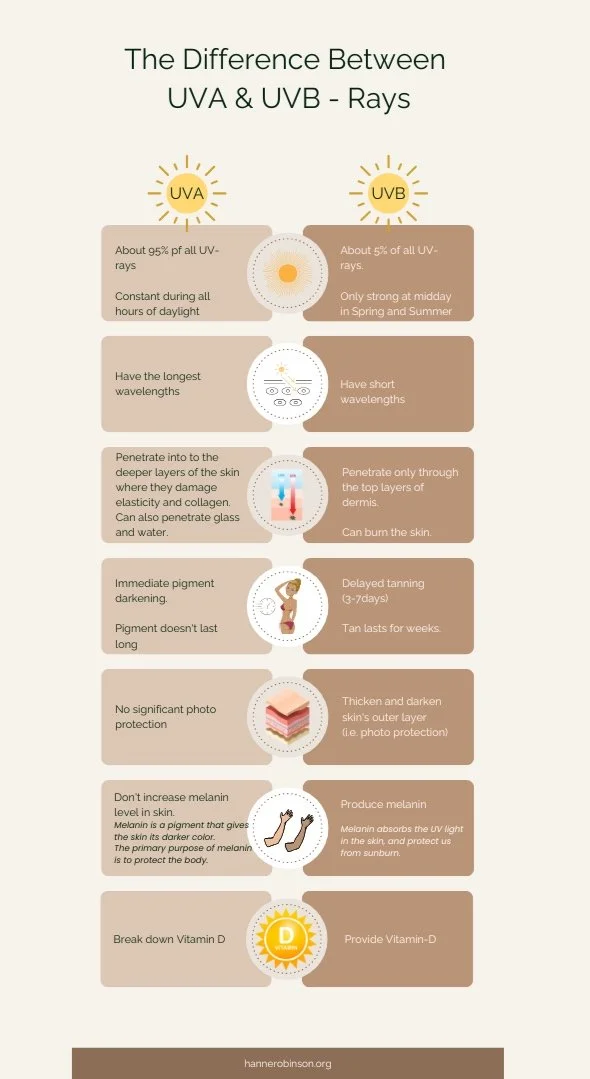
UVB:
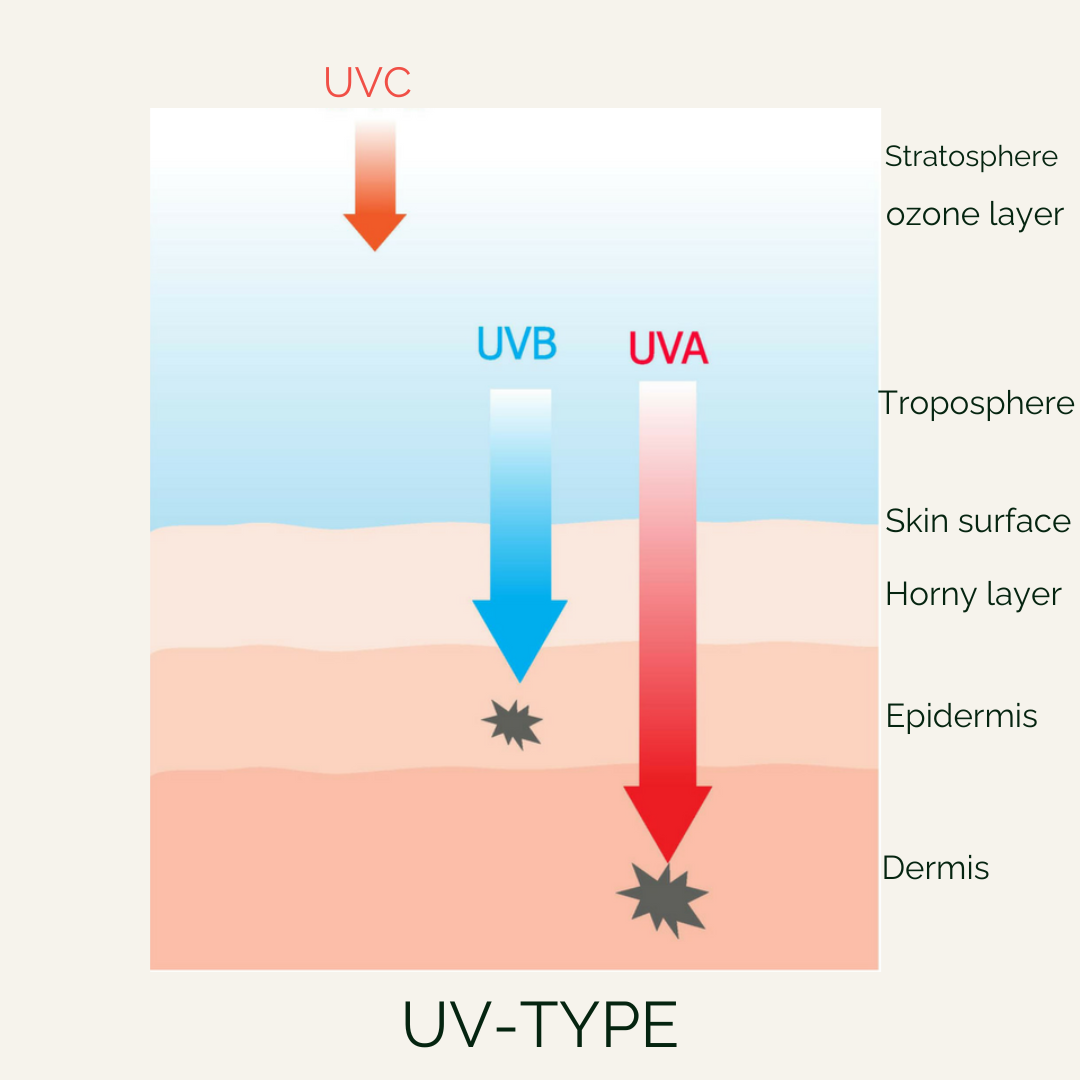
Produces vitamin D and melanin.
Low in the morning, evening and winter, and high in spring and summer at midday.
Only penetrate the top layers of the dermis. They are the rays that burn the skin but also the ones that deliver the essential vitamin D.
Provide a delayed tan (pigmentation) - approx. After 3-7 days, that’s the protective pigmentation we want. Contrary to a UVA tan, the UVB tan lasts for several weeks.
Increase melanin in the skin, and melanin is what gives skin colour. The purpose of melanin is to protect the skin against sunburn. Melanin is the built-in mechanism that naturally protects us from a burn. Furthermore, melanin makes the skin moister and thicker.
UVA:
Are the ones that damage and age the skin if that’s the only rays you get (like through a window) . UVA is relatively constant throughout the day and the year. Although only about 15% of the UVA rays at noon cause redness, they inevitably penetrate the deep layers of skin, where they damage elasticity and collagen.
Penetrate through glass and car windows.
These articles might also interest you…


Disclaimer:
All information in this blog is strictly for informational purposes only and should not be taken as medical advice. The statements made in this blog have not been evaluated by The Danish Health Authority. The products linked to in this blog and any information published in this blog are not intended to diagnose, treat, cure, or prevent any disease. The information provided by this blog is not a substitute for a face to-face consultation with your physician, and should not be construed as medical advice. The entire contents of this blog are based upon the opinions of Hanne Robinson. By reading and using this blog, you agree to only use this publication for personal informational use and not as a substitute for medical or other professional advice.